
Member countries
and regions.
GFSSM is delivered through one partner institution in each member country or region. The academic framework is shared; the local calendar, language and school network are theirs.
Where GFSSM
is run.
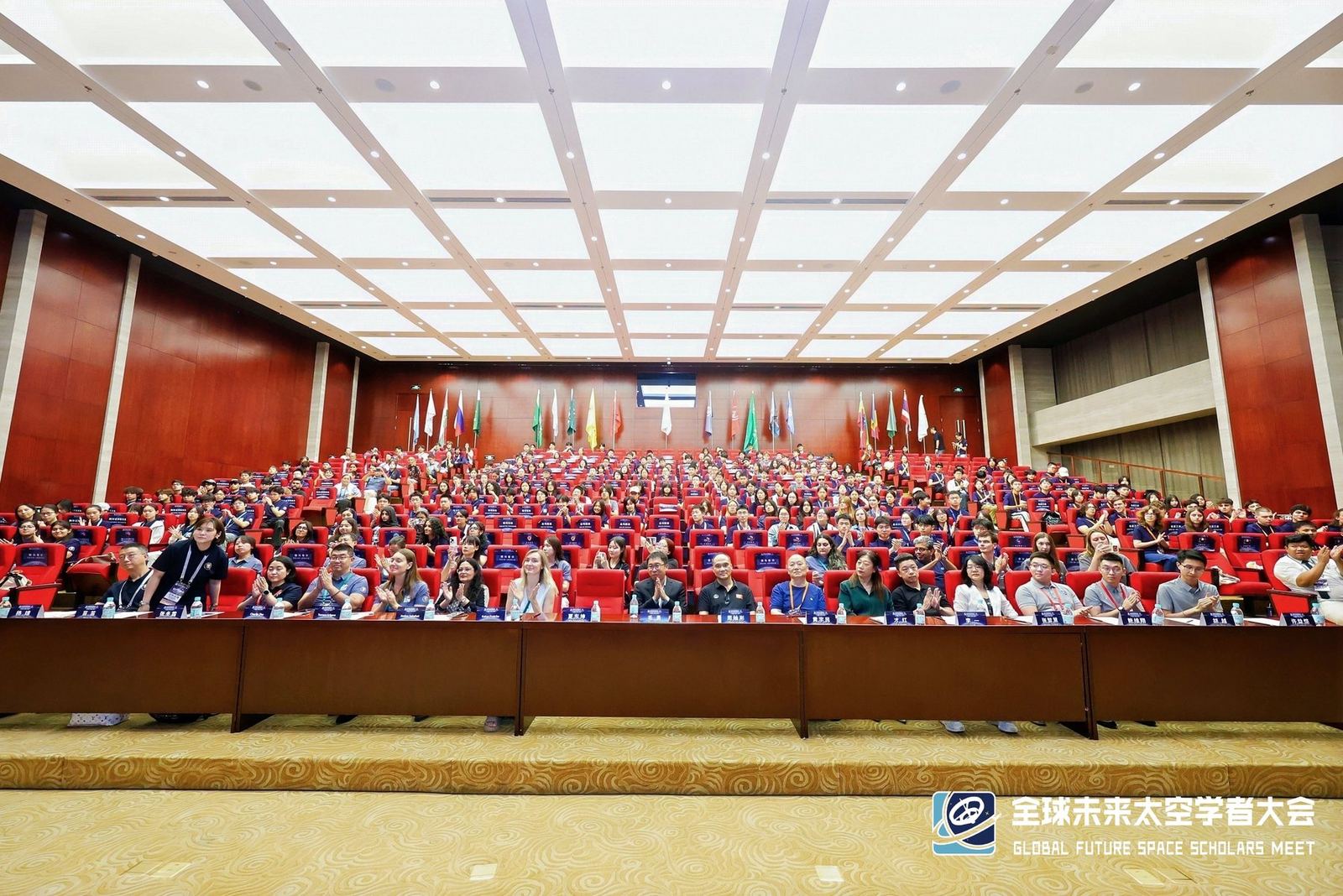
Member countries and regions across Asia and the Pacific, Europe, and the Middle East and Africa. Each is represented by an authorized institution.
China · Japan · Pakistan · Malaysia · Tajikistan · Australia
Russia · Romania · Hungary
Saudi Arabia · Tunisia · Ethiopia · Rwanda
Schools and families should contact the organizer for their own country or region. Where no partner exists yet, write to the International Committee.
Each country or region is represented by one authorized institution. Open a country to see who holds the mandate and what the institution does.
ChinaITCCC
GFSSM’s organizer in China and a co-founder of the programme. ITCCC works on STEAM and project-based curricula, and organizes national participation in the International Linguistics Olympiad, the International Olympiad in Artificial Intelligence, Botball and Future City.
JapanTENGAI
An education organization running interdisciplinary programmes for children and teenagers, built around the Sustainable Development Goals and the 4Cs — critical thinking, communication, collaboration and creativity.
PakistanLahore Grammar School
A private school network known for its English-language provision and the breadth of its co-curricular programme. LGS identifies and prepares teams for GFSSM, and has taken part in the online round and the Global Finals in both seasons since 2025.
MalaysiaApadilangit Space Academy
A space education academy offering Young Astronomer, Space Engineering and AI for Space programmes in Malaysia, Singapore and Brunei, working with the national space agency and the science ministry.
TajikistanAbumahmudi Khujandi Planetarium
The only planetarium in the country, in Khujand, and a national centre for astronomy education: public lectures, student visits, and clubs in astronomy, rocket modelling and robotics.
AustraliaSTEM and Robotics Advancement Association
The Australian organizing committee for the programme. It leads youth technology education nationally and organizes participation in the International Olympiad in Artificial Intelligence and Botball.
Macao, ChinaIn application
The organizing committee for Macao, China is currently in the application process. Institutions that wish to hold the mandate should write to the International Committee.
RussiaCentral University
Co-organizes Russia’s national olympiad in artificial intelligence and computer science, and has prepared national teams for the IOAI and ICO. Holds the GFSSM mandate for Russia for 2026–2028.
RomaniaAtelierele Tamarei
Co-develops national STEM programmes and prepares Romanian students for international competitions in coding, robotics and digital innovation. Holds the GFSSM mandate for Romania for 2026–2028.
HungaryTatai Református Gimnázium
A Reformed Church secondary school in Tata, holding the GFSSM mandate for Hungary from the 2027 season. Its teachers work with a wider network of schools across the region on science and mathematics education.
Saudi ArabiaNew World International School
An international school in Al Khobar serving around 3,000 students, with Cambridge and Pearson Edexcel provision and Cognia accreditation.
TunisiaATAST
The Tunisian Association for the Future of Science and Technology, running national contests, festivals and camps, and coordinating Tunisian participation since 2025.
EthiopiaUniversity of Gondar
One of the oldest and largest universities in Ethiopia, with a research mandate that extends to STEM outreach and teacher development.
RwandaLiquidnet Family High School
The secondary school of the Agahozo-Shalom Youth Village, a non-governmental organization supporting vulnerable young people through education, healing and community.
The record,
in numbers.
International participation has grown every cycle since the on-site programme resumed in 2025.
| Edition | Result |
|---|---|
| 2025 | International Qualifying Round: 4 countries and regions, 10 teams · Global Finals: 34 on-site international participants from 3 countries and regions |
| 2026 | International Qualifying Round: 6 countries and regions, 21 teams · Global Finals: 98 on-site international participants from 8 countries and regions |
| Scale | More than 300 students on site across the full Global Finals in recent editions |
Ten editions,
since 2018.
From a first national event in Beijing to a network spanning four regions, with one partner institution in each country or region.
Founded
GFSSM is jointly initiated by the Space Foundation, the National Space Academy and ITCCC, and the first event is held in Beijing.
Going international
The international launch, and the first finals with students from multiple countries and regions.
Built at home
Continued delivery and development of the domestic programme through the years international travel was suspended.
Back on site
International on-site participation resumes: 34 delegates from 3 countries and regions.
The network widens
98 on-site delegates from 8 countries and regions at the finals; the online round engages 21 teams. The GFSSM Board is established as the formal international governance body.
Ten editions
The tenth edition, with the Global Finals in Beijing from 12 to 16 August.
An international
scientific committee.
The International Scientific Committee (ISC) guides the annual challenge, the technical review and the academic standard. GFSSM events have featured scientists, engineers and researchers from several countries.
Prof. Yao Zhonghua
Director, Laboratory for Space Research, University of Hong Kong.
Dr. Mao Yong
Co-founder, ITCCC Innovative Education; board member, International Olympiad in Artificial Intelligence.
Past speakers and advisers have included Academician Long Lehao, chief designer of the Long March rocket family; Academician Yu Dengyun, deputy chief designer of China’s lunar exploration programme; and researchers and engineers from the China Academy of Space Technology, Peking University, Tsinghua University and the wider space industry.
Your country
or region is open.
Authorization is issued to an institution, not an individual: schools and school networks, education foundations, science centres, universities and youth education organizations.
